

地球与行星物理学术报告通知(202636期)- Vahid Teknik
报告人:Vahid Teknik(Istanbul Technical University (ITU))
报告题目:Imaging the Crustal Structure of the Central Tethyan Belt Using Integrated Geophysical Data
报告时间:2026年11月13日(周五) 10:30-12:00
报告地点:线下教学行政楼1004教室
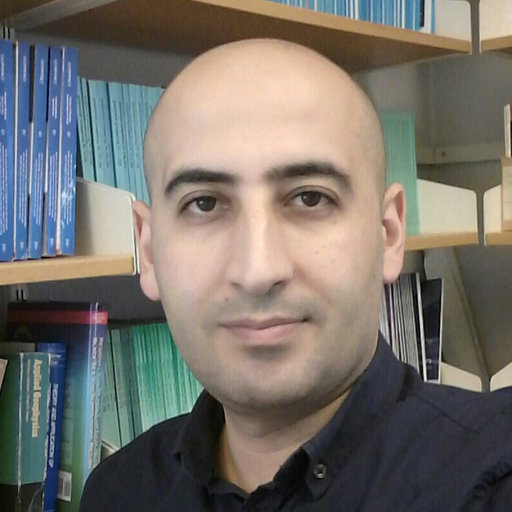
报告人简介:
Dr. Vahid Teknik is an Assistant Professor in the Department of Geomatics Engineering and a Senior Researcher at the Polar Research Center (PolReC), Istanbul Technical University, Türkiye. He completed his doctoral research in geophysics through an international collaboration between the University of Copenhagen and IASBS, focusing on the crustal structure of the Central Tethyan region.His research integrates gravity, magnetic, seismic, and geodetic observations with advanced computational methods to investigate crustal structure, tectonics, and geodynamics. His research interests include potential-field imaging, geophysical modelling, Moho-depth estimation, tectonic mapping, and the application of artificial intelligence to geosciences.He has published more than ten peer-reviewed articles in international journals, including Earth and Planetary Science Letters, Tectonics, Tectonophysics, Geophysical Journal International, Journal of Geophysical Research: Solid Earth, and Natural Resources Research.
报告内容摘要:
The Central Tethyan belt, extending across Anatolia, the Caucasus, and the Iranian Plateau, preserves a complex geological history shaped by oceanic subduction, continental collision, and lithospheric deformation. However, much of its crustal architecture remains hidden beneath sedimentary cover, making it challenging to reconstruct the tectonic evolution of this region.To address this challenge, we integrate aeromagnetic, satellite gravity, and seismic observations with geophysical modelling and machine-learning techniques. Spectral analysis of aeromagnetic data reveals buried magmatic–ophiolitic belts and provides new insights into ancient subduction systems. By combining nearly 2,500 seismic Moho-depth measurements with gravity constraints and machine learning, we construct an updated regional crustal model, revealing substantial variations in crustal thickness and Moho depths of 50–60 km along parts of the Zagros–Central Iran collision zone.Further density and magnetic modelling across the Zagros and Makran regions constrains major tectonic boundaries, Arabian plate underthrusting, and a previously unrecognized paleo-Tethys suture zone. In the Makran subduction zone, extensive serpentinization may also help explain its unusually low seismicity and limited arc magmatism. Together, these findings provide new insights into the crustal structure and geodynamic evolution of the Central Tethyan belt.
 返回列表

 地址:
 电话:
 邮箱: