

中国科大地空学院“瀚海问天”日地空间物理前沿论坛讲座第31期-田晖
报告人:田晖(北京大学)
报告题目:From the solar corona to stellar coronae
报告时间:2026年3月5日(周四)上午10:00
报告地点:教学行政楼702-706
报告人简介:
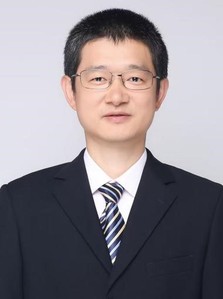
Hui Tian is a professor at the School of Earth and Space Sciences at Peking University. His primary research focuses on solar physics, with interests spanning solar atmospheric dynamics to stellar magnetic activity. As either first or corresponding author, he has published approximately 100 peer-reviewed papers, including four in the journal Science. He serves as a chief scientist of China’s Solar Polar-orbit Observatory (SPO) mission, is a member on the Steering Committee of the Coronal Solar Magnetism Observatory in the USA, and acts as an associate editor for the journal Living Reviews in Solar Physics. He is the PI of several research grants, including the Distinguished Young Scholars (continuation grant) and the Innovative Exploration Program from NSFC. He has received several prestigious honors, including the AAS/SPD Harvey Prize, the XPlorer Prize, and the China Youth Science and Technology Award.
摘要:
The corona is the outermost layer of the Sun's atmosphere. Its physical properties and eruptive activities shape the electromagnetic and particle environment of the Earth in the universe. The corona's million-degree temperature causes it to expand outward, generating the continuous supersonic solar wind. Transient eruptions in the corona drive intense disturbances in the Sun-Earth system and even throughout the heliosphere, resulting in space weather phenomena. Magnetic fields serve as the fundamental energy source for both coronal heating and eruptions. In recent years, although progress has been made in theories of coronal heating, behaviors of eruptions, and methods of magnetic field diagnostics, direct observational evidence of heating mechanisms, accurate predictions of coronal eruptions and their impacts on Earth, and routine measurements of coronal magnetic fields remain elusive. Similarly, other late-type stars possess coronae heated to millions or even tens of millions of degrees. Their eruptive events, such as stellar coronal mass ejections, drive exospace weather, which can profoundly influence the formation of habitable environments on exoplanets. Currently, our understanding of stellar coronal activity and its implications for habitability is still very limited. Addressing these questions requires the development of a new generation of solar and stellar telescopes. In particular, there is a critical need for multi-perspective, stereoscopic observations of the Sun, full-disk extreme ultraviolet (EUV) spectroscopy of the Sun, and continuous EUV photometric and spectroscopic monitoring of nearby late-type stars.
 返回列表
返回列表
 地址:
地址: 电话:
电话: 邮箱:
邮箱: